

28 January 2026
Porcelain tiles are a popular choice for both residential and commercial spaces thanks to their durability, versatility, and timeless aesthetic. While porcelain is naturally hard-wearing and easy to maintain, proper care is important to protect the tile’s surface and keep it looking and performing at its best.
This guide will show you how to clean porcelain tiles safely and effectively, with tips on the best techniques, what to avoid, and how to prevent common mistakes—helping your tiles stay beautiful and last for years to come.
Table of Contents
- Why Proper Cleaning Matters for Porcelain Tile Longevity
- What Not to Use When Cleaning Porcelain Tiles
- The Best Way to Clean Porcelain Tiles: A Step-by-Step Routine
- Tile Finish Matters: Care Tips for Matte, Polished & Textured Surfaces
- Cleaning Frequency: Residential vs Commercial
- Aftercare Checklist for Homeowners and Trade Handover Packs
- Need Help with Tile Care? Talk to Our Experts
Why Proper Cleaning Matters for Porcelain Tile Longevity
While porcelain tiles are highly durable and generally low maintenance, a simple routine of regular cleaning and care goes a long way in keeping your tiles looking fresh, hygienic, and safe for everyday use. Using the right products and following recommended cleaning methods is just as important, as harsh chemicals or incorrect processes can affect how your tiles perform — including slip resistance, surface finish, appearance, and even the longevity of your tiles and grout. With the right care, your porcelain tiles will continue to look great and perform beautifully for many years to come.
What Not to Use When Cleaning Porcelain Tiles
When cleaning porcelain tiles, using the wrong products or tools can cause damage the surface and affect long term performance. To protect the performance and appearance of your tiles, avoid the following:
- Harsh Chemicals: Regular use of cleaning agents that are excessively acidic or alkaline — can cause irreversible damage to the tile surface. This includes vinegar, ammonia, and bleach.
- Waxes and Polishes: These can leave a slippery film that attracts dirt, causes streaking, and can permanently alter the appearance of porcelain tiles.
- Abrasive Pads or Powders: Scratching and surface wear can occur, especially on glazed or polished porcelain tiles, affecting long-term appearance and safety.
- Soap-Based Cleaners: Soap cleaners (such as laundry detergents or household soaps) leave a residue film that attracts dirt, causes streaking, and makes porcelain tiles harder to keep clean over time.
Always follow the instructions and guidelines from the manufacturer when using cleaning products on porcelain tiles. If you’re unsure about how to use a product or how often it should be applied, check with the manufacturer or a qualified tile care professional.
The Best Way to Clean Porcelain Tiles: A Step-by-Step Routine
Porcelain tiles are highly resilient and stain-resistant, making them one of the easiest tile types to maintain. However, allowing dirt and grime to build up can scratch the surface and make ongoing cleaning more difficult. A regular cleaning routine helps keep your porcelain tiles looking their best while preserving their performance over time. The steps below apply to most porcelain tiles, although some tile types or installation locations may need different products or methods — we’ll highlight any special maintenance requirements for specific tile types later in the article.
General Cleaning
Regular cleaning helps remove everyday dirt, water marks, and limescale, keeping your porcelain tiles looking fresh and bright. For routine cleaning, we recommend a pH-neutral cleaner, such as Lithofin KF Vitra Clean, a mildly alkaline product formulated for daily use.
Recommended Cleaning Products for Porcelain Tiles – General Cleaning
- Soft broom or vacuum
- Microfibre mop or a soft bristled brush (for coarser tile finishes)
- Bucket
- Appropriate PPE including cleaning gloves
- pH-neutral cleaner (e.g., Lithofin KF Vitra Clean), diluted according to the manufacturer’s instructions
- It is important to be cautious with your choice of cleaning solution.
When choosing a cleaning solution and tools, avoid harsh abrasives unless they’re specifically recommended for your tile type. Cleaning up spills promptly helps reduce the risk of stains and keeps your tiles looking and performing their best.
Step-by-Step General Cleaning:
- Loose dirt and debris: Use a soft-bristle broom to sweep away dirt, sand, and other debris, or vacuum if needed.
- Prepare your cleaning solution: Dilute a pH-neutral cleaner (such as Lithofin KF Vitra Clean) in warm water according to the manufacturer’s instructions.
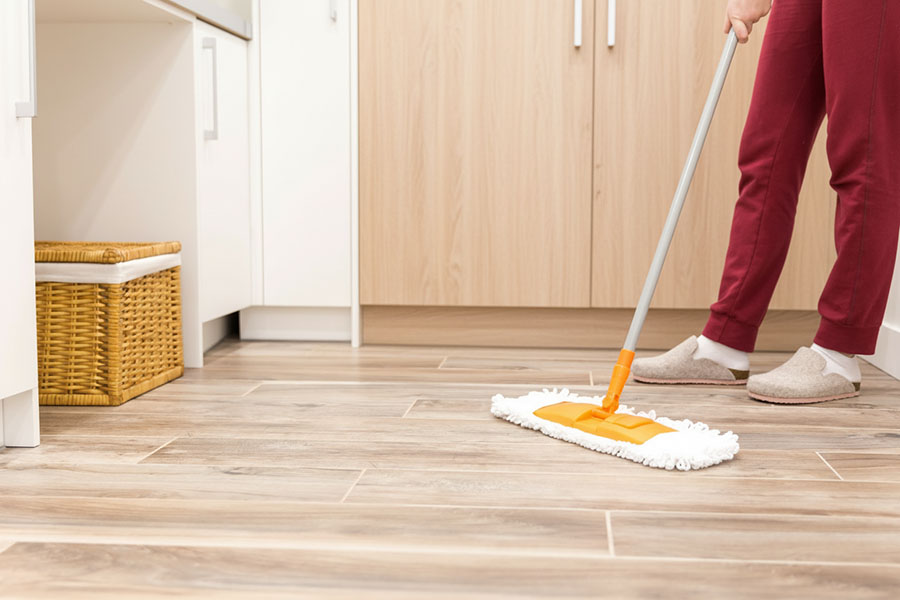
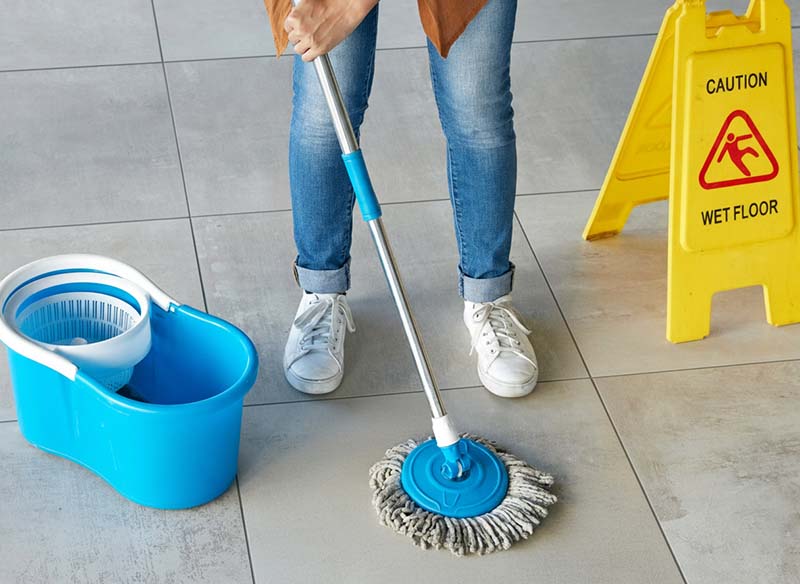
- Clean the tiles: Mop or wipe the surface with a microfibre cloth. If the finish on the tiles is coarser, a soft bristled brush works best. For larger areas, a mechanical scrubbing machine can be used. Be sure to test on a small patch first.
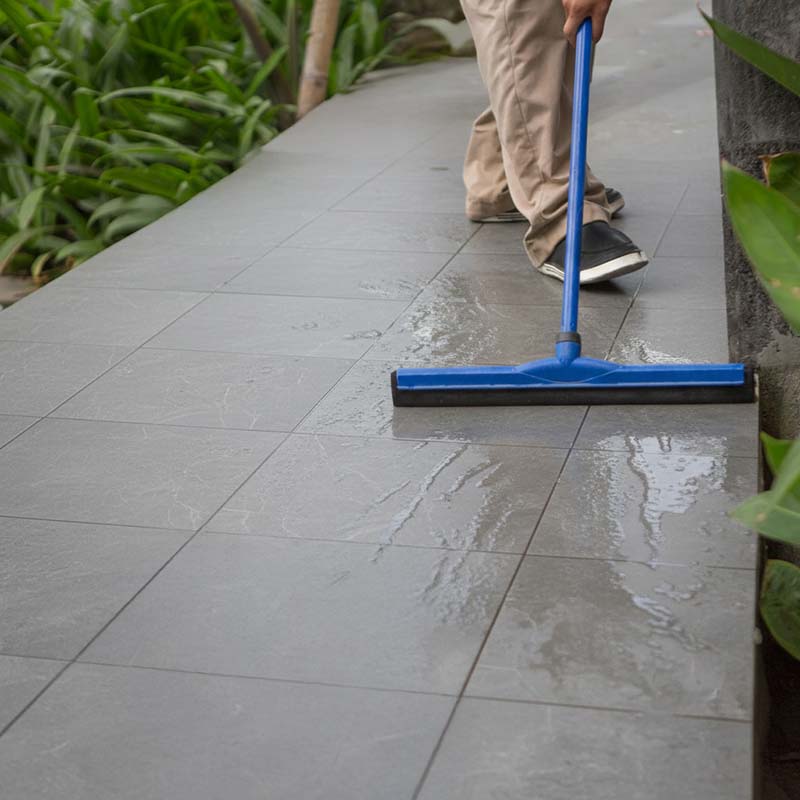
- Rinse well: Make sure to rinse the tiles thoroughly. This removes any detergent residue that could leave the surface dull or sticky.
Periodic Cleaning
Sometimes porcelain tiles need a deeper, periodic clean, especially in high-traffic areas or where prolonged dirt and grime have accumulated. In these cases, a stronger cleaner such as Lithofin KF Intensive Cleaner can be used occasionally to remove stubborn dirt, rubber marks, polymer residues, and leftover wax.
Step-by-Step Periodic Cleaning
- Prepare the surface: Ensure the tiles are clean and free from dust and loose dirt.
- Dilute the cleaner: Follow the product specifications for dilution — more dilution increases safety.
- Apply to a test area first: Use a soft brush, or white pad to apply the cleaner and let it sit for a few minutes.
- Scrub the tiles: Work the surface with the pad (or soft bristled brush for coarser tile finishes, machine for large spaces), then allow another 5 minutes for the cleaner to act, then rinse.
- Continue cleaning: If the test area achieves the desired result, continue cleaning the rest of the surface
- Rinse thoroughly: Wash the tiles well with clean water to remove all residue.
Initial Clean After Installation
Grout haze occurs when grout isn’t fully rinsed or wiped away during installation, leaving a residue on the tiles. This haze can make dirt and footmarks more visible and is difficult to remove with regular cleaning. It may also be the cause of streaking or a dull appearance that is unrelated to daily dirt.
To remove grout haze, a specialised cleaner such as Lithofin KF Cement Residue Remover is recommended. This post-install cleaning process should only be used when necessary, such as if grout haze is present. If your tiles are already clean, regular maintenance is sufficient and this deeper clean is not required.
Recommended Products for Post-Install Cleaning
- Lithofin Cement Residue Remover
- Water
- Sponge or (or soft bristled brush for coarser tile finishes)
- Spray bottle
- PPE: mask, gloves, eye protection
- Buckets
Step-by-Step Post-Install Cleaning
- Prepare the solution: Dilute the product according to the label. For light residue, start with at least a 1:10 dilution to minimise risk to grout colour.
- Test a small area first: Apply the solution to a discrete area using a sponge (or soft bristled brush for coarser tile finishes). Minimise both dilution and dwell time during testing — this helps determine the correct concentration and application time. Pre-wet grout joints to protect them during cleaning.
- Agitate the surface: Allow the solution to dwell, then scrub with a white nylon pad, mop, or soft brush (mechanical cleaner for larger spaces if needed).
- Remove dirty solution: Use a mop or wet/dry vacuum (for larger spaces) remove residue.
- Rinse thoroughly: Rinse the surface with clean water, optionally following with a pH-neutral cleaner.
Expert tip: Always test first. Stronger acidic products can lighten darker grout colours (such as anthracite or grey), so start with a milder dilution. This protects the grout and ensures a clean, even finish.
Tile Finish Matters: Care Tips for Matte, Polished & Textured Surfaces
The cleaning tips above suit most porcelain tiles, but some tile types or specific situations may require different products or methods. We’ve included additional guidance for these below.
Glazed Porcelain Tiles
Glazed porcelain tiles are highly durable and low-porosity, making them ideal for high-traffic areas. Regular cleaning with a pH-neutral product prevents dirt buildup and helps maintain the tile’s appearance and performance over time.
Unglazed Tiles
Unglazed porcelain tiles have a natural, matt, or textured finish, without the glaze of glazed porcelain tiles. Regular cleaning with a suitable pH-neutral cleaner, followed by a thorough rinse, prevents buildup that could dull the surface. In general, unglazed tiles are cleaned similarly to glazed tiles, with care taken to rinse thoroughly and maintain their performance over time.
Polished Tiles
Polished tiles have a reflective, shiny surface created by mechanically grinding and polishing unglazed porcelain surface. This process can leave micro-pores, so they require slightly more careful maintenance than other finishes. Some unglazed polished tiles may benefit from sealing after installation, depending on the product specifications. Always dry or buff polished tiles after cleaning to maintain their high-gloss finish, as water spots can be visible on reflective surfaces. Avoid acidic or abrasive cleaners and harsh cleaning tools, as these can scratch or dull the high gloss shine of the polished porcelain tiles.
Slip Resistant and Outdoor Tiles
Slip resistant and textured tiles have a rougher surface that is more likely to trap dirt, oils, and other residues in the surface texture. For these tiles, more frequent cleaning is recommended, especially for busy commercial or outdoor spaces. Outdoor tiles are also exposed to the elements and can accumulate dirt, water marks, limescale, rust, and foliage stains.
While their textured surface provides excellent slip resistance, it also can need extra attention to clean thoroughly compared to matt or gloss tiles. Regular scrubbing helps prevent grime from embedding in the surface. Because dirt and debris can get caught in the coarse finish, use a soft-bristled to agitate the area. It’s also essential to ensure these tiles are free from grout residue after installation to maintain both their appearance and performance.
SmartGrip Tiles
Our Milazzo range features SmartGrip technology, an advanced micro-texture surface that is smooth when dry and slip-resistant (P4) when wet. To maintain the performance and appearance of SmartGrip tiles, follow the recommended cleaning and maintenance procedures in Johnson Tiles SmartGrip Cleaning and Maintenance Guide — covering everything from grout haze removal to general cleaning. Following this routine helps preserve slip resistance and keeps your tiles looking their best over time.
How to Deal with Stains, Spills & Common Tile Issues
General Cleaning for Dirt and Spills
Extra tips for general cleaning:
- Act quickly: Clean up spills immediately to prevent slip hazards and reduce the risk of staining.
- Routine sweeping: Use a soft broom and vacuum where necessary.
- Light maintenance: Often, a combination of sweeping and wiping with a microfiber mop is sufficient for everyday care.
Dealing with Specific Stains
If routine cleaning doesn’t remove a stain, you may need to use targeted approaches for:
- Grease, oil, wax, varnish, paint, rubber, silicone, polymer residues – these can be stubborn and may need specialised cleaners.
- Engrained dirt and plant stains – often require gentle scrubbing with the right solution.
- Mould and mildew – common in damp areas. Keep the space well-ventilated, surfaces dry, and use appropriate mould treatments.
- Rust, grout, cement, mortar, efflorescence – efflorescence shows up as a light, powdery deposit from salt migration. Treat it with a suitable remover and fix any moisture issues.
- Calcium deposits, soap scum, hard water stains, white marks – these mineral deposits can build up over time in wet areas, so regular cleaning helps prevent them.
Always follow the instructions on any cleaning product and test it on a small, hidden area first to make sure it’s safe for your tiles.
Grout Care
Grout is important not just for the look of your tiles, but also for keeping them hygienic. Because it’s porous, grout can stain easily—especially in wet areas where mould can appear.
- Use a grout-safe cleaner to keep it looking fresh without causing damage.
- Clean with a plastic bristle brush—avoid steel wool, which can leave rust-prone particles behind.
- Seal cement-based grout after installation to slow moisture and dirt absorption, making cleaning much easier.
- Stick to the manufacturer’s recommended cleaning and re-sealing schedule to keep your grout looking good and lasting longer.
Cleaning Frequency: Residential vs Commercial
The frequency of cleaning depends on the environment and level of foot traffic.
- Residential: Most areas benefit from a weekly clean. High-use zones such as kitchens, entryways, and bathrooms may need more frequent attention.
- Commercial: Daily cleaning is generally required due to heavy foot traffic, moisture, dirt, and food residues.
Aftercare Checklist for Homeowners and Trade Handover Packs
To help protect the performance and appearance of your porcelain tiles, we’ve put together a practical aftercare checklist. Use our Tile Aftercare Checklist for regular cleaning, maintenance, and handover instructions to ensure your tiles look their best and last for years.
Need Help with Tile Care? Talk to Our Experts
Have questions about tile care? Our experts can help you protect your investment. Contact us here.
Tile maintenance and care is essential for keeping your tiles looking great for years to come. By following these tips mentioned in this article, you can keep your tiles clean, protected, and in great condition. If you have any questions about tile maintenance and care, be sure to give our experienced team a call.
Please note: Carefully read the directions for use on the labels and the technical information sheets and always wear protective goggles, rubber gloves and boots when working with corrosive and strong degreasing products.
