21 January 2026
Key Takeaways
- Assess the bathroom layout before you design. This includes natural light, moisture zones and bathroom size.
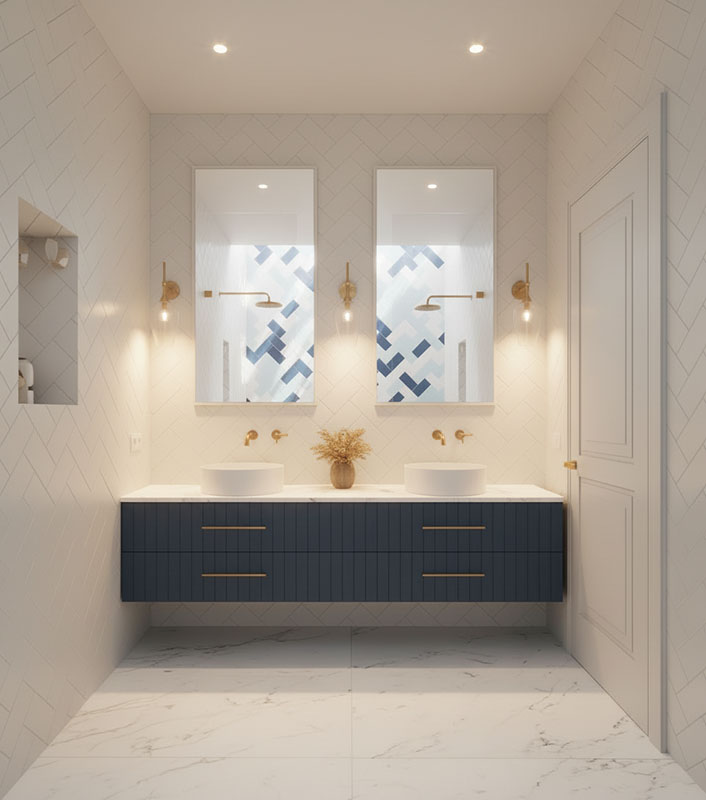
- Full-height tiling in showers and wet areas can give a high-end feel.
- Depending on the budget, cost-effective glazed ceramic tiles can be a good alternative to porcelain tiles.
Table of Contents
- Start With the Space: Reading the Room Before Choosing Tiles
- Statement Walls or Full Wraparounds? How to Design With Impact
- Finish Strong: Gloss, Matt, and Everything Between
- Don’t Slip Up: Understanding Bathroom Tile Ratings
- Built to Last: Technical Considerations Behind the Beauty
- Designed for Designers: Tile Collections by Johnson Tiles
Start With the Space: Reading the Room Before Choosing Tiles
Does your modern bathroom tile design match the existing bathroom layout? To select your tiles with the right blend of practicality and beauty, assess the following points:
- How much natural light is there?
- How is the room illuminated?
- Where are the moisture zones?
- Is the bathroom small or spacious?
If the bathroom is small, you can create the illusion of space with a small bathroom tile design. Selecting larger tiles with fewer grout lines can make the bathroom seem larger, especially with lighter-coloured, glossy tiles.
Statement Walls or Full Wraparounds? How to Design With Impact
Would your bathroom wall tile design be best served by a striking feature wall or full-height tiling? Full-height tiling is ideal for wet areas such as showers and can make the space feel bigger and more streamlined. It can give the bathroom a high-end, luxury feel, similar to a spa, especially when selecting stone-look tiles.
Alternatively, you can use a tiled feature wall as a focal point, making its own statement, or use it to highlight other key elements in your bathroom design (such as fixtures). Creating a bold focal point can be achieved through colour, tile pattern, grout selection and tile shape. For example:
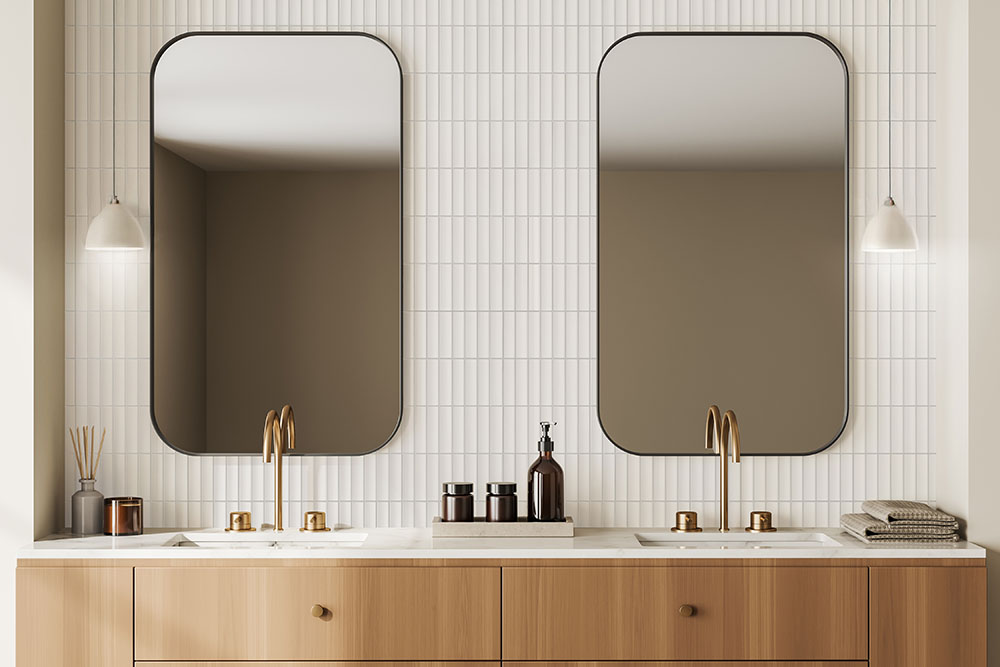
- Smaller mosaic tiles come in various shapes, including squares, hexagons, and skinny rectangles. These add texture and dimension to any bathroom.
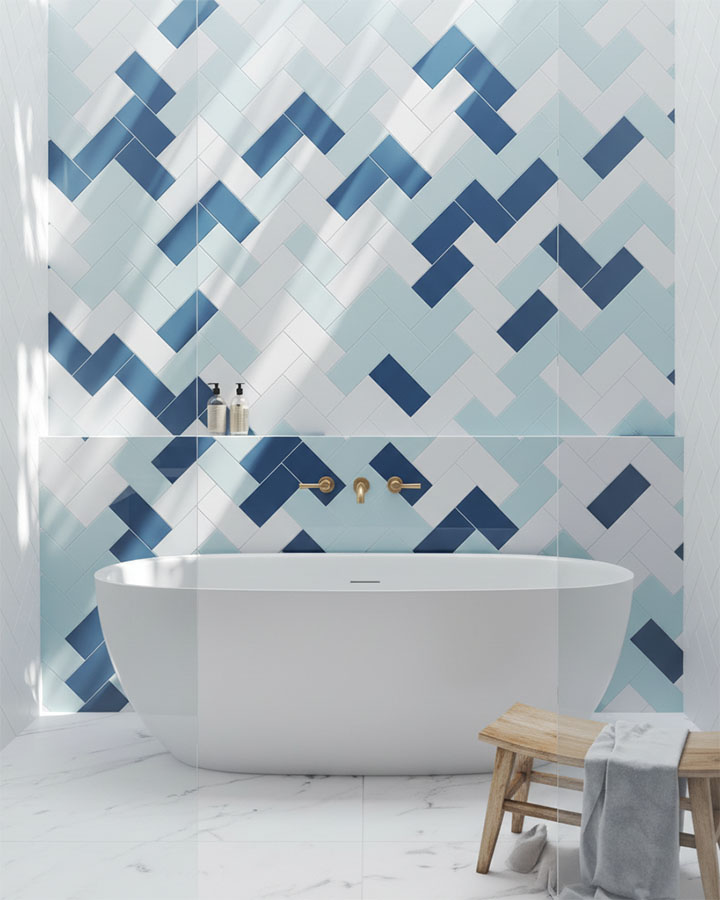
- Subway tiles can create a pleasing effect and draw the eye when placed in a diagonal or herringbone pattern.
- Your selection of grout colour is a key design element in a feature wall. It can provide contrast and highlight the tile pattern dynamically or it can blend in to create a seamless look.
Finish Strong: Gloss, Matt, and Everything Between
A versatile design element is the tile finish. At Johnson Tiles, we offer tile finishes in gloss, matt, satin, lappato, grit, structured, polished and others.
Gloss is a popular design choice for bathroom walls due to its light-reflecting properties, which can make the bathroom seem bigger. Matt tiles provide a calm and modern feel, while lappato tiles have a semi-polished, natural look and are relatively easy to clean. Grit tiles usually have a high slip rating and a textured surface, but their coarse finish can make them impractical for most bathrooms. They are generally better suited to outdoor and commercial applications such as pool surrounds, patios and external walkways.
Don’t Slip Up: Understanding Bathroom Tile Ratings
After your bathroom tiles design ideas are finalised, what about the practicality? How do you reduce the risk of people slipping on a wet bathroom floor? The main slip resistance ratings to consider are:
- Wet Pendulum Test (P rating) – This measures the slip resistance of the floor’s surface under wet conditions. It utilises a pendulum device with a spring-loaded rubber slider to simulate the action of a heel striking the surface. This determines the tile’s Slip Resistance Value (SRV). The classifications range from P0 to P5, with P5 being the most slip-resistant.
- Oil-Wet Inclining Platform Test (R rating) – Its purpose is to determine the slip resistance of tiles subjected to oil spills or grease. A wet/oily surface is simulated, and the angle of the surface is gradually increased until the person begins to slip. The classifications range from R9 to R13, with R13 being the most slip-resistant.
When specifying bathroom tiles for commercial projects, it is essential to review the relevant regulations for the specific application to ensure compliance with Australian Standards and building requirements. In practice, this means using AS 4586 test data alongside guidance such as SA HB 198 and the National Construction Code to align each space with at least its minimum P or R rating.
In residential bathrooms, slip resistance should also be carefully considered to create a safe environment for everyday use. Ideally, floor tiles should provide some level of underfoot grip, while still being practical to clean in an interior setting. For example, some P4 and P5 slip-rated tiles can have a heavily textured surface, which can make routine cleaning more difficult, as a standard household mop may not effectively clean deep surface textures. Striking the right balance between safety, comfort and ease of maintenance is key when selecting bathroom tiles for the home.
To find the slip rating of Johnson Tiles products, expand the “Product Specifications” tab and scroll down to the Slip Rating information. You can also download the Technical Data Sheet for that particular product, which often contains slip rating information.
Built to Last: Technical Considerations Behind the Beauty
How does the composition of the tile affect your bathroom floor tiles design? Let’s examine the differences between ceramic and porcelain tiles.
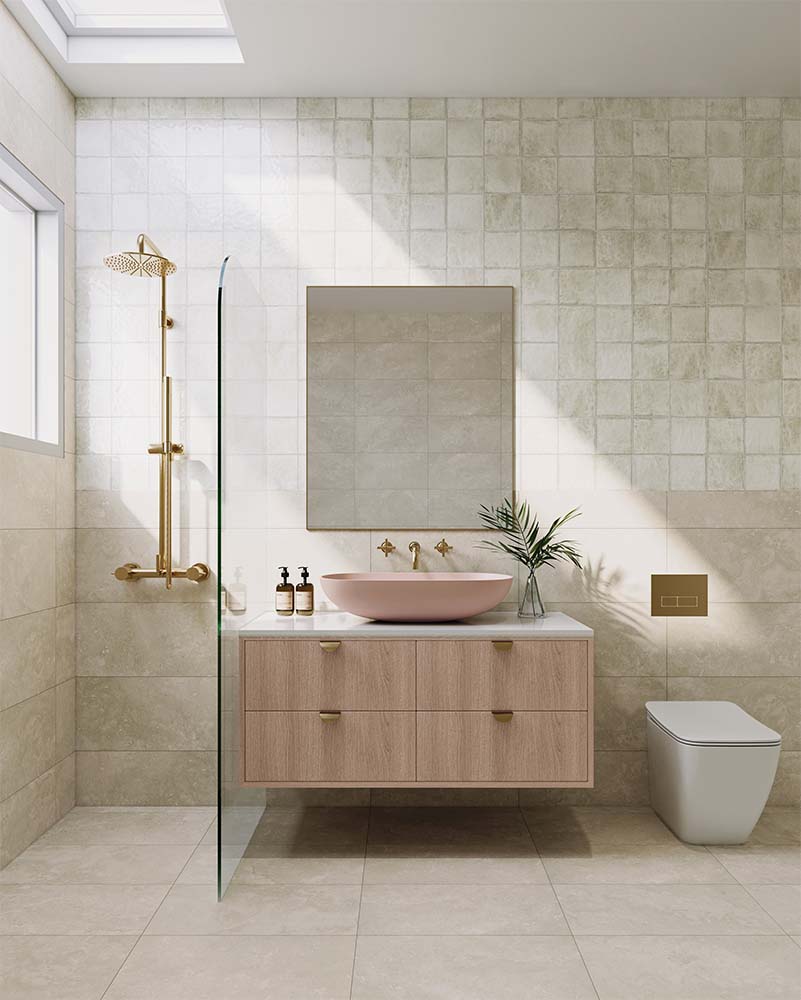
Ceramic is a durable, cost-effective tile made from natural clay and other natural materials that are fired in a kiln. Porcelain is a denser, more refined clay product, fired at higher temperatures, making it harder and less porous.
The density of porcelain gives it superior resistance to wear, stains, and moisture. Porcelain tiles are ideal for bathrooms, high-traffic areas, and outdoor applications. That’s why porcelain is the preferred choice for Australian coastal properties where moisture is a concern.
At Johnson Tiles, we add glaze to the surface of our ceramic tiles to give them a non-porous, protective finish that improves aesthetics and water resistance while providing a barrier against dirt and grime. The glaze also allows for a vast array of colours and decorative designs, with shades including charcoal, grey, beige, white, antique white, terra, sage and many more.
Our range of porcelain and glazed ceramic tiles provides longevity, wear resistance, and ease of cleaning without compromising on aesthetics.
Designed for Designers: Tile Collections by Johnson Tiles
Let your bathroom tile design ideas run free! At Johnson Tiles, our range of bathroom tile options is suited to residential and commercial spaces across a variety of styles and specifications. Our style options include traditional, farmhouse, contemporary, mediterranean, classic, coastal, country, modern, scandinavian, vintage and industrial.
At Johnson Tiles, we’re proud of the quality and durability of our bathroom tiles, which is why we back our products with a 10-year Product Guarantee against defects and premature wear.